CDL Class A vs Class B: Which License Should You Get?
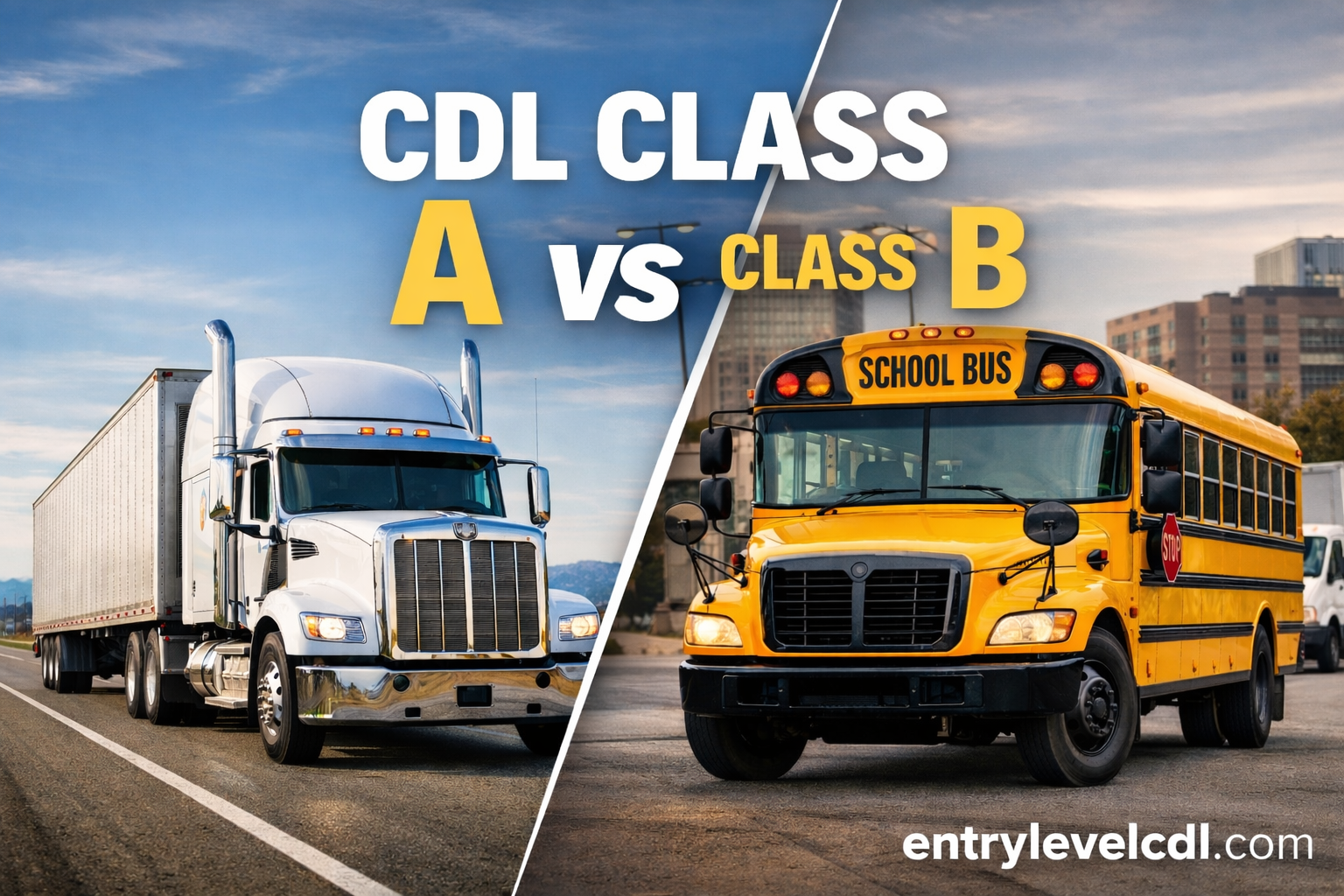
CDL Class A vs Class B: Which License Should You Get?
If you are considering a career in trucking, one of the first decisions you will face is which type of commercial driver's license to pursue.
The two most common options are Class A CDL and Class B CDL.
Both licenses allow drivers to operate commercial vehicles, but they apply to different types of trucks and job opportunities.
Understanding the differences between these licenses can help you choose the right path before starting CDL training.
What a Class A CDL Allows You to Drive
A Class A CDL allows drivers to operate combination vehicles with a gross combined weight rating (GCWR) of 26,001 pounds or more, where the towed vehicle weighs more than 10,000 pounds.
This category includes many of the trucks most people associate with the trucking industry.
Vehicles that require a Class A CDL include:
- tractor-trailers (semi trucks)
- tanker trucks
- livestock carriers
- flatbed trucks
- refrigerated freight trucks
Because these vehicles haul the majority of freight across the country, Class A licenses open the door to the largest number of trucking jobs.
What a Class B CDL Allows You to Drive
A Class B CDL allows drivers to operate single vehicles with a gross vehicle weight rating (GVWR) of 26,001 pounds or more, where the towed vehicle weighs less than 10,000 pounds.
These vehicles are usually shorter and easier to maneuver than tractor-trailers.
Common Class B vehicles include:
- straight trucks
- box trucks
- dump trucks
- city buses
- school buses
- delivery trucks
Many Class B jobs involve local routes and daily deliveries.
Key Differences Between Class A and Class B CDL
| Feature | Class A CDL | Class B CDL |
|---|---|---|
| Vehicle type | Combination vehicles | Single large vehicles |
| Trailer weight | Over 10,000 lbs | Under 10,000 lbs |
| Job types | Long-haul freight, regional routes | Local delivery, buses, construction |
| Training complexity | Higher | Moderate |
| Job opportunities | Very large | More specialized |
In simple terms, Class A licenses offer more flexibility and more job options, while Class B licenses focus on specific types of vehicles.
Which CDL License Pays More?
In many cases, Class A drivers earn higher salaries.
Long-haul trucking, regional freight routes, and specialized hauling often pay more than local delivery jobs.
Typical salary ranges look like this:
| Job Type | Average Pay |
|---|---|
| Entry-level Class A OTR driver | $50,000 – $70,000 |
| Experienced Class A driver | $70,000 – $100,000+ |
| Class B local delivery driver | $40,000 – $60,000 |
Actual pay depends on experience, location, and the type of freight being hauled.
Which CDL Is Easier to Get?
Class B licenses are generally easier to obtain.
Training is often shorter because drivers do not need to learn how to operate tractor-trailers or manage long trailers during backing maneuvers.
However, many drivers still choose Class A training because it provides more career flexibility.
Which CDL Should Beginners Choose?
For most people starting a trucking career, Class A is usually the better choice.
A Class A license allows drivers to operate both Class A and many Class B vehicles, which creates more job options.
Drivers with a Class B license cannot legally operate most tractor-trailers.
This means upgrading later may require additional training.
How Long It Takes to Get Either License
Both license types require CDL training and a state licensing test.
The timeline is usually similar for both.
Most drivers complete training and testing within one to two months.
You can learn more about the full process here:
How Long It Takes to Get a CDL
The Bottom Line
Choosing between a Class A and Class B CDL depends on your career goals.
Drivers who want the widest range of trucking opportunities usually pursue a Class A license.
Those who prefer local delivery, construction, or bus driving jobs may find that Class B training fits their goals better.
Understanding the differences between these licenses can help you start your trucking career with the right training and job opportunities.
If you want to explore beginner trucking jobs, see this guide:
Entry-Level CDL Jobs: The Complete Guide for New Drivers